
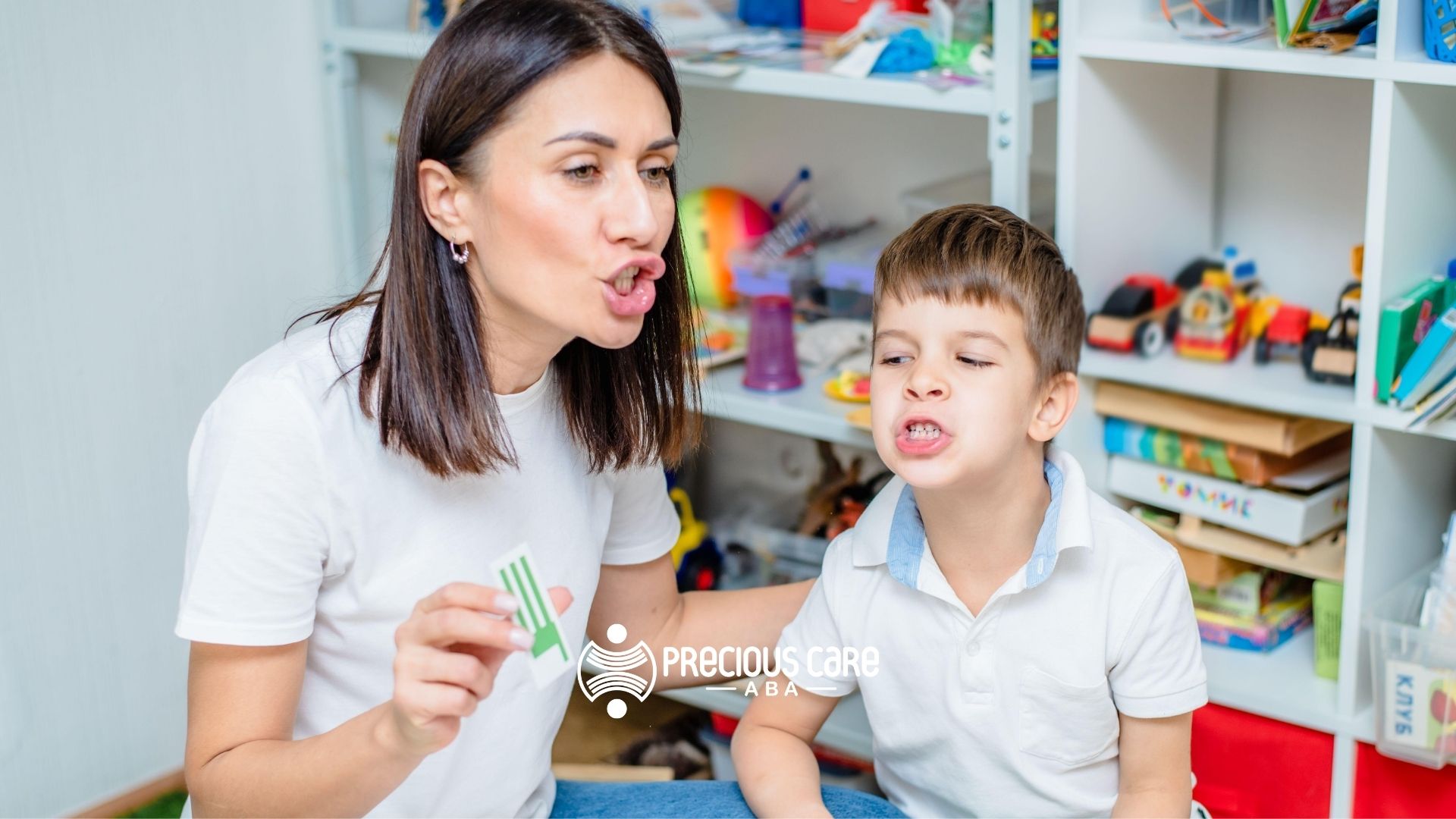
Welcome to our guide on basic skills training in Applied Behavior Analysis (ABA). Have you ever wondered how ABA therapy helps individuals learn new and important life skills? This effective approach uses a systematic process to build foundational abilities in areas like communication, social interaction, and self-care. At its core, behavior analysis provides a valuable tool and structured framework to teach positive behaviors. In this article, we will explore the key components and methods used in skills training to empower individuals and enhance their daily lives.
Understanding Basic Skills Training in ABA Therapy
Basic skills training in Applied Behavior Analysis is a structured teaching process designed to help individuals, particularly those with autism spectrum disorder, acquire essential life skills. This effective method is often referred to as Behavioral Skills Training (BST), and it serves as a cornerstone of modern ABA therapy programs.
The training focuses on breaking down complex abilities into smaller, teachable moments for different scenarios. By using clear instructions, demonstrations, and practice, therapists can successfully teach new behaviors. This systematic approach ensures that learners understand and master each step, building confidence along the way.
What Is ABA Therapy and Why Is It Important?
Applied Behavior Analysis (ABA) therapy is an evidence-based, effective approach used to improve socially significant behaviors. Rooted in the science of learning and behavior, this therapy helps us understand how behavior works, how it is affected by the environment, and how learning takes place. The goal is to increase helpful behaviors and decrease those that are harmful or affect learning.
The importance of ABA therapy lies in its ability to produce positive outcomes. It plays a crucial role in offering a structured path to skill development, from communication to social interaction. The first skills typically taught in ABA therapy are often foundational ones, such as following simple instructions, making requests (manding), and basic imitation. These early skills create the building blocks for more complex learning.
Through consistent behavior analysis and reinforcement, ABA therapy empowers individuals by giving them the tools they need to navigate their world more effectively. It is a highly individualized approach that promotes independence and enhances the overall quality of life for individuals and their families.
Foundational Goals of Basic Skills Training
The primary goal of skills training is skill acquisition. This means helping individuals learn new, functional behaviors that will serve them in their daily lives. Whether it’s learning to communicate needs, interact with peers, or perform self-care tasks, the focus is always on building practical abilities.
Another one of the foundational goals is to replace challenging behaviors with a desired behavior. By teaching a person a more effective way to get their needs met—for example, by using words instead of gestures—the training reduces frustration and promotes positive interactions. This systematic process helps build a strong repertoire of useful skills.
So, how does ABA therapy personalize basic skills training for each child? Every program starts with a comprehensive assessment to identify the individual’s unique strengths and specific skills needs. Based on this evaluation, therapists create a tailored skills training plan with specific goals, ensuring the interventions are relevant and effective for that person.
Who Benefits from Basic Skills Training in ABA?
Behavioral skills training in ABA therapy is incredibly beneficial for a wide range of individuals across different settings. It is most commonly associated with helping children and adults on the autism spectrum. People with other developmental disorders also see significant progress in acquiring essential life skills through this structured approach.
Because ABA therapy is tailored to individual needs, it can address the specific challenges a person faces. The training helps them build communication, social, academic, and self-help skills, which leads to greater independence and confidence in various settings. This makes it a powerful tool for anyone needing support with skill development.
Beyond the direct client, the target audiences for behavioral skills training also include parents, caregivers, and professional staff. Training family members and educators on these techniques ensures that the individual receives consistent support across different workplace environments and other settings, which is crucial for generalizing and maintaining new skills.
Core Components of Basic Skills Training
At the heart of skill acquisition in ABA is a proven, four-step process. These core components provide a clear and effective framework for teaching various skills, including new behavioral skills. This method ensures that learning is not just theoretical but practical and can be applied in real-world situations.
Understanding these steps can help you see how behavior analysis works to build competence and confidence. Let’s look at the specific strategies that make up the components of BST, this powerful teaching model, and how they work together to promote lasting behavior change.
Skill Acquisition Strategies Used in ABA
In Applied Behavior Analysis, skill acquisition is achieved through a systematic method known as Behavioral Skills Training (BST). The effectiveness of BST in this context is evident as this approach is highly effective for teaching new skills because it is structured and interactive. It ensures the learner fully understands and can perform the desired behavior.
The main skill acquisition strategies used in ABA therapy follow four distinct steps. Each step builds upon the last, creating a comprehensive learning experience that moves from understanding to mastery of acquired skills. This process is designed to be clear, supportive, and reinforcing.
The four components are:
- Instruction: The therapist provides clear, concise instructions on how to perform the targeted behavior skill.
- Modeling: The therapist demonstrates the skill correctly, giving the learner a visual reference.
- Rehearsal: The learner gets opportunities to practice the skill in a controlled and supportive setting.
- Feedback: The therapist provides constructive feedback, praising correct performance and guiding improvements.
The Role of Reinforcement in Learning New Skills
Positive reinforcement is a powerful engine for learning new skills in ABA therapy. It involves providing a rewarding consequence immediately after a desired behavior occurs, which makes that behavior more likely to happen again in the future. Think of it as a way of saying, “Great job! Let’s do that again.”
How does positive reinforcement help in ABA basic skills training? When a learner successfully practices a new skill during the rehearsal phase, the therapist might offer praise, a high-five, or access to a favorite toy. This positive feedback motivates the learner to keep trying and helps them associate the new skill with a positive experience.
This systematic approach is a core principle of behavior analysis. By consistently reinforcing correct responses, therapists build momentum and make the learning process enjoyable and effective. It turns a challenging task into a rewarding one, encouraging engagement and speeding up skill acquisition.
Breaking Down Complex Behaviors into Simple Steps
Teaching complex skills, like tying shoelaces or having a conversation, can feel overwhelming. That’s why breaking down these behaviors into small, manageable steps is a fundamental strategy in behavior analysis. This process, known as task analysis, makes learning much more achievable.
During the instruction phase of training, a therapist presents one small step at a time instead of the entire complex skill at once. For example, teaching handwashing might start with just turning on the water. Once that step is mastered, the next one is introduced, and so on, until the entire sequence is learned.
Why is breaking down complex behaviors crucial in ABA therapy for individuals with developmental disabilities? It prevents the learner from becoming frustrated or discouraged. By ensuring success at each small step, it builds confidence and momentum. This method allows individuals to master skills that might otherwise seem too difficult, paving the way for greater independence.
Communication Skills in ABA Therapy
Effective communication is one of the most critical areas addressed in ABA therapy. The ability to express wants, needs, and feelings is fundamental to reducing challenging behaviors and fostering positive social interactions. Behavioral skills training provides an excellent framework for teaching these abilities.
Using this structured approach, therapists can target both understanding language and using it to communicate. We will now explore how ABA therapy helps build different types of communication skills, from basic language to functional expression.
Teaching Expressive and Receptive Language
ABA therapy systematically addresses both expressive language (how we communicate) and receptive language (how we understand communication). This dual focus is essential for building well-rounded communication skills. During therapy sessions, specific goals are set for each area.
How does ABA therapy improve expressive and receptive language skills? It uses skills training methods to break down language into understandable parts. For receptive language, a therapist might teach a child to follow directions like “touch your nose” or “get the ball.” For expressive language, the focus might be on teaching the child to label items, ask for things, or answer questions.
This structured approach makes learning language less abstract. Therapists use modeling, practice, and reinforcement to build these abilities step-by-step. Key targets often include:
- Following one- and two-step instructions.
- Identifying objects, pictures, and people.
- Making requests for desired items or activities.
- Answering social questions (e.g., “What’s your name?”).
- Using words or signs to express needs and wants.
Building Functional Communication Skills
Functional communication is all about teaching an individual to express their needs and wants in an effective and appropriate way. Often, challenging behaviors arise from an inability to communicate. Behavioral skills training directly addresses this by teaching a replacement behavior that serves the same function.
So, how are functional communication skills taught in ABA interventions? A therapist first identifies the purpose of a target behavior. For instance, if a child screams to get a toy, the function is to obtain an item. The therapist then teaches the child a more functional way to achieve that goal, such as pointing, using a picture card, or saying “toy, please.”
Through instruction, modeling, and rehearsal, the new communication method is practiced until it becomes easier and more effective for the child than the old behavior. Constructive feedback and positive reinforcement are given every time the child uses the new skill, strengthening it until it becomes their go-to way of communicating.
Enhancing Social Interaction Through ABA
Social skills are essential for building relationships and navigating the world, but they can be challenging for many individuals. ABA therapy provides a structured way to teach the unwritten rules of social interactions. Using behavioral skills training, therapists break down complex social behaviors into learnable components.
How does ABA therapy address social interaction skills? It targets specific abilities like initiating a conversation, taking turns, sharing, reading body language, and maintaining eye contact. Therapists use modeling to show what a successful interaction looks like and then create opportunities for the individual to practice these skills in a safe environment.
Through rehearsal and feedback, the individual refines their abilities. For example, a therapy session might involve role-playing a conversation with a peer or practicing how to join a game on the playground. This hands-on approach helps build the confidence and competence needed for positive social interactions in everyday life.
Daily Living Skills Addressed by ABA Training
A major goal of ABA training is to foster independence in everyday life. This is achieved by teaching essential daily living skills, also known as adaptive skills. Behavior skills training is the perfect tool for this, as it breaks down multi-step routines into simple, clear actions.
From personal hygiene to following household routines, these skills are crucial for self-sufficiency. Let’s examine how ABA helps individuals master these self-help skills and gain more control over their personal care and daily schedules.
Self-Help Skills and Independence
Self-help skills are the foundational tasks we perform daily to care for ourselves. For many individuals, learning these skills requires direct and systematic instruction. A versatile approach to behavior skills training in ABA provides just that, empowering individuals to achieve greater independence.
What self-help skills are addressed in ABA training? The range is broad and is always tailored to the person’s age and abilities. Common examples include dressing oneself, eating with utensils, brushing teeth, and basic food preparation. Each of these tasks is broken down into a sequence of smaller, manageable actions.
By teaching these new behaviors one step at a time, ABA therapists ensure that the learner can succeed. Positive reinforcement is used at each step to build confidence and motivation. As individuals master more self-help skills, their reliance on others decreases, and their sense of accomplishment and self-worth grows significantly.
Personal Hygiene and Self-Care
Personal hygiene and self-care are critical daily living skills that directly impact health and social acceptance. In ABA therapy sessions, these routines are often a key focus. Common personal hygiene skills taught in ABA include handwashing, toothbrushing, bathing, and getting dressed.
Teaching these skills involves a task analysis, where the routine is broken down into a checklist of simple steps. Therapists may use visual aids, like picture schedules, to help the learner remember the sequence. Through modeling, prompting, and reinforcement, each step is practiced until the entire routine can be completed independently.
This structured approach removes the guesswork and makes these often-complex routines manageable. Below is an example of how a task like brushing teeth is broken down.
| Skill: Brushing Teeth | Teaching Steps |
|---|---|
| Step 1 | Get toothbrush and toothpaste. |
| Step 2 | Put a small amount of toothpaste on the brush. |
| Step 3 | Wet the toothbrush. |
| Step 4 | Brush top teeth, bottom teeth, and tongue. |
| Step 5 | Spit out the toothpaste. |
| Step 6 | Rinse mouth and toothbrush. |
| Step 7 | Put supplies away. |
Following Routines and Directions
Routines bring predictability and structure to our days, which can be very comforting and reduce anxiety. Why is teaching routines vital in ABA therapy? For individuals who struggle with transitions or executive functioning, predictable routines create a sense of safety and help them understand what is expected of them throughout the day.
ABA uses behavioral skills training to teach individuals how to follow daily routines, such as a morning schedule or a bedtime routine. This might involve using visual schedules or checklists to guide them through the steps. Similarly, therapists work on teaching individuals to follow one-, two-, and multi-step directions from others.
The learning process starts with simple, one-step directions and gradually increases in complexity. Clear instructions and positive reinforcement are used to encourage success. As learners become more proficient at following directions and routines, they gain greater independence at home, at school, and in the community.
Play, Leisure, and Socialization Skills
Play is not just for fun; it is a critical part of a child’s development. It is how they learn about the world, practice new abilities, and engage in socialization. ABA therapy recognizes the importance of play and leisure skills and incorporates them directly into treatment plans.
Using a structured yet fun approach, therapists help individuals learn how to play appropriately with toys, engage in leisure activities, and interact with peers. Let’s explore how ABA fosters these vital play skills and helps generalize them to different social settings.
Encouraging Appropriate Play in Therapy
For some individuals, knowing how to play with toys or engage in games doesn’t come naturally. ABA therapy can help teach these essential behavioral skills in a fun and engaging way. Therapists identify the individual’s interests and use them to make learning to play a motivating experience.
How does ABA therapy encourage appropriate play? It uses modeling and prompting to demonstrate how to use a toy or play a game. For example, a therapist might show a child how to build a tower with blocks or roll a car on the floor. The child is then given a chance to practice these skills with gentle guidance.
Positive reinforcement, like praise or cheers, is given for any attempt to play appropriately. The goal is to expand the individual’s play repertoire and help them find joy in new activities. Common play goals include:
- Engaging with a toy as it was designed.
- Taking turns in a simple game.
- Engaging in pretend play scenarios.
- Exploring new leisure activities.
Fostering Peer Interactions and Group Activities
Once an individual has developed some basic play skills, the next step is to use them in social situations. Fostering positive peer interactions is a key goal of ABA therapy. This is often done in small group activities where individuals can practice their new skills with others in a supportive environment.
How are peer interactions fostered in ABA therapy? Therapists create structured opportunities for social engagement. This might involve a group game that requires turn-taking or a collaborative art project where children have to share materials. The therapist acts as a facilitator, prompting and reinforcing positive social behaviors.
These group activities provide a safe space to practice important social skills like initiating play, responding to peers, sharing, and compromising. Over time, individuals become more confident and capable in their interactions, building a foundation for making and keeping friends.
Generalization of Social Skills Across Settings
Learning social skills in a therapy room is just the first step. The ultimate goal is for the individual to use these new behaviors in various settings, like at school, on the playground, or at a family gathering. This process is called generalization, and it is a crucial focus of ABA therapy.
How is social skill generalization addressed in ABA? Therapists work systematically to ensure skills transfer to the real world. This involves practicing skills with different people (e.g., other therapists, parents, peers) and in different environments. For example, a skill practiced in the clinic might next be practiced at a local park.
Family involvement is also key to promoting generalization. Therapists train parents and caregivers to recognize opportunities to practice social skills and reinforce them at home and in the community. By making generalization an intentional part of the plan, ABA helps ensure that learning is meaningful and lasting.
Key ABA Teaching Methods for Basic Skills
As we’ve seen, behavioral skills training plays a vital role as a powerful framework for skill development. Within this framework, ABA interventions rely on specific teaching methods to make learning happen. These techniques are the practical tools therapists use to guide individuals toward mastering new skills.
These methods are designed to be clear, supportive, and highly effective. Let’s take a closer look at two of the most important teaching methods used in ABA: modeling and prompting, and the cycle of rehearsal, feedback, and specific components of these methods.
Modeling and Prompting Techniques
Modeling and prompting are two of the most essential teaching tools in ABA. How are they used? Modeling involves the therapist demonstrating the target skill, which gives the learner a clear visual example of the correct execution of the desired behavior. For instance, if teaching a child to say “hello,” the therapist will first model the word clearly.
Prompting involves providing a cue or hint to help the learner perform the behavior correctly. Prompts can be verbal, gestural, or physical. The goal is to provide just enough support to ensure success, and then gradually fade the prompts as the learner becomes more independent.
Together, modeling and prompting set the learner up for success. They ensure the individual knows what to do and has the support to do it. This leads to more opportunities for positive reinforcement and makes the learning process feel encouraging rather than frustrating. Key prompting techniques include:
- Verbal prompts: Giving a verbal clue, like the first sound of a word.
- Gestural prompts: Pointing or motioning to guide the correct response.
- Physical prompts: Gently guiding the person’s hand to complete an action.
Using Rehearsal and Feedback
What is the role of rehearsal and feedback in ABA training? They are the active components where learning is solidified. The rehearsal phase is where the learner gets to try the skill themselves. Providing multiple practice opportunities is crucial for building fluency and confidence.
During and after each practice attempt, the therapist provides constructive feedback, as feedback is a crucial component of BST. This isn’t about criticism; it’s about providing immediate information that helps the learner improve. Feedback for correct responses often involves enthusiastic praise or another form of positive reinforcement, which strengthens the behavior.
If the response is incorrect, the feedback is gentle and corrective, often leading back to another modeling or prompted attempt. This continuous loop of rehearsal and feedback refines the skill, clarifies expectations, and motivates the learner to keep trying until they achieve mastery.
Conclusion
In summary, basic skills training in ABA therapy is essential for fostering independence and enhancing the quality of life for individuals, offering numerous benefits. By focusing on communication, daily living skills, and social interactions, therapists can help clients develop the foundational skills necessary for everyday success. The structured approach of ABA ensures that each individual’s unique needs are met, allowing for tailored strategies that facilitate learning and growth. Whether through modeling, prompting, or reinforcement, the goal remains the same: to empower individuals by breaking down complex behaviors into manageable steps.
At Precious Care ABA, we focus on building strong foundational skills that support long-term growth for children with autism. Serving Colorado, Utah, New Jersey, and Maryland, our team uses individualized ABA programs to strengthen communication, daily living skills, social interaction, and early learning abilities. Each plan is tailored to meet your child’s unique needs and help them gain confidence in everyday routines. Reach out to Precious Care ABA today to learn how our personalized basic skills training can support your child’s development.
Frequently Asked Questions
What are the first skills typically taught in ABA therapy?
The first skills taught in Applied Behavior Analysis are foundational ones that pave the way for future learning. This often includes teaching a child to respond to their name, follow simple instructions, imitate actions, and make requests for things they want. These basic steps are a crucial part of behavior skills training.
How does ABA therapy personalize basic skills training for each child?
ABA therapy is highly personalized to meet each child’s unique needs. It begins with a thorough assessment to identify specific strengths and challenges. Based on this, therapists design a tailored intervention plan, continuously providing constructive feedback and making necessary adjustments to ensure the goals are relevant and achievable.
Can parents be involved in their child’s ABA basic skills training?
Yes, absolutely! Family involvement is crucial to the effectiveness of behavioral skills training. Parents are often trained by therapists to help their child practice skills at home and in the community. This consistent level of support helps children generalize their new abilities and ensures long-term success with ABA therapy.
Sources:
- https://pmc.ncbi.nlm.nih.gov/articles/PMC8586097/
- https://pmc.ncbi.nlm.nih.gov/articles/PMC5139667/
- https://www.simplypsychology.org/positive-reinforcement.html
- https://www.autismspeaks.org/applied-behavior-analysis
- https://pmc.ncbi.nlm.nih.gov/articles/PMC6269383/
- https://asdtoddler.fpg.unc.edu/prompting-module/overview-prompting/what-prompting/types-prompts.html
- https://www.hopebridge.com/events/physical-prompting-what-is-it-and-when-does-it-become-something-more/
